no war click here <><><><><>>u n peace chiyu bank xiamen university canada Dr Albert Einstein sze wei Tan陳士偉博士 - Dr Julie Rao 6047109668 6047703400 6044288682 clinic health tip be productive do a product a good or services 6048138423 clinic 6047703400 6044288682
🌍 Life Is Good
When we choose kindness, forgiveness, and service
🤝 Treat Others Well
Treat others the way you want to be treated.
💖 Forgive
Forgiveness brings peace to the heart.
💼 Work & Be Productive
Honest work helps you and helps the world.
📚 Education
Learning gives power to help others.
🩺 Service & Medicine
Serving people — like doctors and helpers — saves lives.
Motivation Hub
Motivation to Work
Hard work is the key to success. Set clear goals, break them into tasks, and stay consistent. Remember, every effort counts towards your dreams. Stay positive and push through challenges!

Motivation to Exercise
Exercise boosts your energy, improves health, and reduces stress. Start small, find activities you enjoy like walking or yoga, and track your progress. Your body will thank you!

Motivation to Eat Well
Eating nutritious foods fuels your body and mind. Focus on whole foods, balance your meals, and treat yourself occasionally. Healthy eating is a lifestyle, not a diet!

Motivation to Make Friends
Building friendships enriches life. Be open, join groups or events, listen actively, and be genuine. True friends support and inspire you.

Social Skills: Discover Who is Good and Who is Bad
Good friends are supportive, honest, and respectful. Bad influences may be manipulative, unreliable, or negative. Learn to spot the signs through interactions and trust your instincts.
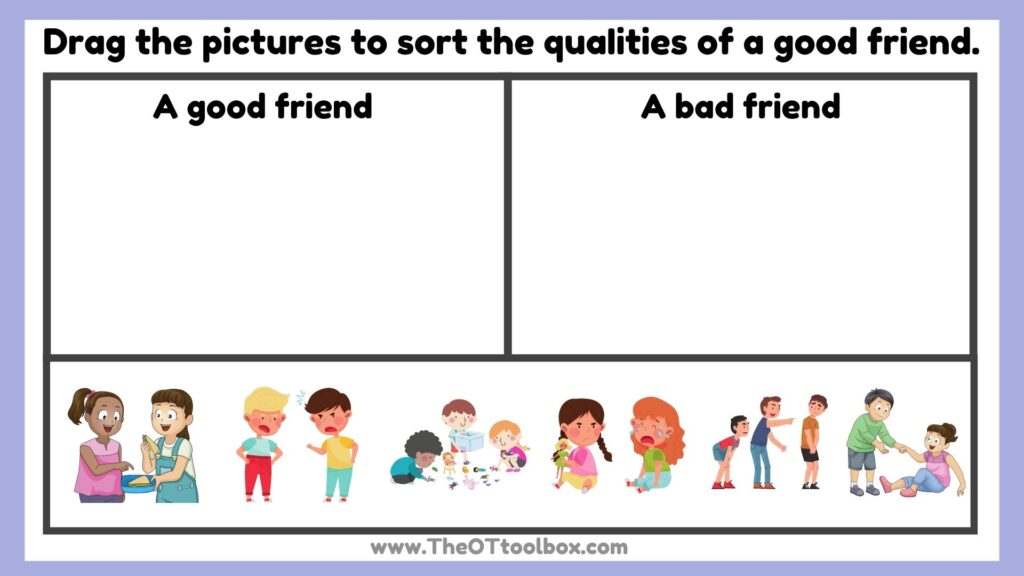
Social Skills Quiz Game
Test your ability to identify good vs. bad social behaviors. Answer the questions below.
Question 1: A friend always encourages you to try new things and celebrates your successes. Is this good or bad?
Question 2: A person often cancels plans last minute without apology. Is this good or bad?
Question 3: Someone shares your secrets with others. Is this good or bad?
Healthy Living Tips for a Peaceful, Joyful Life
Dr. Julie Rao: click VVVVV book online
https://beijingtrt.janeapp.com/#/staff_member/3/treatment/13
click <<<<<<<<<<<<<<<<<<<<<<^^^^^^^^^^^^?>>>>>>>>>>> north van bc clinic
richmond 6047109668 text prefer mandarin english
Dr. (Julie) Yan Tao Rao is a registered Traditional Chinese Medicine (TCM) practitioner and acupuncturist based in Burnaby, British Columbia, Canada, with over 20 years of experience. She specializes in treating a wide range of conditions, including:
- Pain (neck, shoulder, back, joints, muscles, sports injuries, and accident recovery)
- Allergies, asthma, insomnia, stomachaches, flu, depression, mental health, weight loss, diabetes, hyperthyroidism, stroke recovery, and arthritis
- Women’s health (irregular menstruation, PMS, infertility)
- Skin conditions (acne, eczema, psoriasis, scleroderma)
- Men’s health (enlarged prostate, erectile dysfunction)
- Pediatric issues (digestive problems, congenital conditions)
- Anti-aging (body slimming, facial lifting, hand/leg rejuvenation, breast enhancement)
- Energy support for chemotherapy and post-surgery rehabilitation
Subject: A Natural Approach to Diabetes Care in the Vancouver Area
Dear Friend, https://gilmorewellnessclinic.janeapp.com/#/staff_member/36/treatment/5 click <<<<<<<<<<<<<<<<<<<<<<^^^^^^^^^^^^?>>>>>>>>>>>>burnaby bc canada clinic
If you are living with diabetes in the Vancouver, Burnaby, North Vancouver, or Richmond area, you are not alone — and you have options.
Managing diabetes can feel overwhelming. Between medications, monitoring blood sugar, diet changes, and long-term health concerns, it’s important to have a care plan that supports your whole body — not just your numbers.
Dr. Julie Rao offers a compassionate, personalized approach to diabetes support through Traditional Chinese Medicine and acupuncture. By combining time-honored healing practices with modern understanding of metabolic health, Dr. Rao works with patients to help:
Support healthy blood sugar balance
Improve circulation
Reduce stress and inflammation
Increase energy and overall well-being
Complement existing medical treatment plans
Patients throughout Vancouver, Burnaby, North Vancouver, and Richmond have turned to Dr. Rao for a natural, integrative approach to managing diabetes and improving quality of life.
Traditional medicine and acupuncture focus on restoring balance within the body. Many individuals find that this holistic approach not only supports their diabetes management but also improves sleep, digestion, and emotional health.
If you or a loved one is living with diabetes and looking for additional support, consider scheduling a consultation with Dr. Juli Rao to explore how Traditional Chinese Medicine may benefit you.
Take the next step toward balanced health and renewed vitality.
1️⃣ Traditional Drug Discovery vs AI-Assisted
Traditional Process:
- Target identification → compound screening → preclinical testing → clinical trials
- Takes 10–15 years and $1–2 billion per drug
AI-Assisted Process:
- AI can analyze huge datasets to predict which molecules might work before lab testing
- Cuts years off research and reduces costs drastically
2️⃣ How AI Speeds Up Each Stage
🔹 A. Target Identification
- AI analyzes genomic, proteomic, and biochemical data
- Finds proteins or pathways that are most promising to target
- Example: AI predicted a new cancer-related protein target in months, which traditionally took years
🔹 B. Drug Candidate Screening
- Normally, thousands of compounds are tested in vitro or in animals
- AI can simulate molecular interactions digitally
-
Predicts:
- Which molecules will bind to the target
- Which are likely safe and bioavailable
Impact: Reduces lab experiments from thousands to hundreds
🔹 C. Predicting Side Effects & Toxicity
- AI can analyze chemical structure + biological data
- Predicts toxicity, off-target effects, and metabolism
- Example: avoiding a compound that would fail in phase 2 saves years of trial time
🔹 D. Optimizing Clinical Trials
-
AI can:
- Identify patient subgroups most likely to respond
- Predict dosing schedules
- Reduce trial sizes without losing statistical power
Impact: Trials become faster and more efficient
🔹 E. Drug Repurposing
- AI can analyze existing drugs for new uses
- Example: AI predicted that a blood pressure drug could help COVID-19 patients, speeding up clinical trials
3️⃣ Why AI Works Faster
- Computational speed: processes millions of compounds in hours
- Pattern recognition: finds molecular patterns humans might miss
- Integration: combines genetic, biochemical, and clinical data
4️⃣ Real-World Impact
-
Companies like Insilico Medicine and Exscientia are using AI to:
- Design novel molecules in under 12 months
- Move directly into animal or human testing
- Traditional design: often 4–5 years just for lead candidate
5️⃣ Limitations / Caveats
- AI predictions still need lab validation
- Data quality is critical—garbage in → garbage out
- Regulatory approval still takes years
⚡ Bottom Line
AI doesn’t replace human researchers—it makes them faster, more precise, and reduces costly failures.
Think of it like a super-powered shortcut through the traditional drug pipeline, especially in:
- Target discovery
- Candidate selection
- Trial design
- Safety prediction
💊 How Roche & NVIDIA Are Working Together
🧬 1. AI Partnership for Drug Discovery
Roche’s biotech arm Genentech has a multi‑year collaboration with NVIDIA to accelerate drug discovery and development using AI. This effort combines:
- Genentech’s biological expertise and proprietary datasets
-
NVIDIA’s advanced computing and AI platforms
to create a next‑generation AI research system tailored for life sciences.
Specifically:
- NVIDIA provides high‑performance AI computing hardware and software frameworks (like BioNeMo) designed for biological modelling and generative AI.
- Genentech uses this environment to train and customize AI models that can analyze molecular data, predict how drug candidates behave, and accelerate discovery workflows.
🚀 Examples of What AI Can Do in Roche’s Context
🔹 A. Predicting Molecular Interactions
AI models can simulate how a molecule will bind to a biological target long before lab experiments begin. This narrows down candidates quickly and cheaply compared to traditional screening methods.
🔹 B. Generating Better Candidates
Platforms like BioNeMo can generate new molecular structures that might work better than existing compounds — essentially proposing novel drug ideas based on patterns AI finds across huge datasets.
🔹 C. Optimization & Iteration
AI can help optimize:
- chemical properties
- likely safety profiles
-
metabolic stability
so that drug candidates going into the lab for testing have a higher probability of success than random selection would.
🧠 Will It Actually Work? How Likely/Useful Is It?
✅ Advantages — Why This Approach Can Work
-
Superior computing power + huge data:
Roche deployed thousands of NVIDIA GPUs — one of the largest computing footprints in pharma — to power complex research tasks. -
Speed & scale:
AI can run simulations in hours/days that would take years in traditional labs, which shortens early discovery cycles significantly. -
Better candidate selection:
Instead of blindly testing thousands of compounds, AI helps prioritize the most promising ones — reducing cost, time, and failure rates.
⚠️ Limitations & Real‑World Challenges
-
Still needs lab validation:
AI predictions must be tested in the real world (in cells, animals, and then humans). AI might suggest something promising, but if it fails biologically, the prediction doesn’t matter. -
AI isn’t magic:
Early successes have been more about optimizing existing research than discovering blockbuster drugs instantly. Real impact in terms of new approved medicines still takes time. -
Data quality matters:
AI is only as good as the data it learns from. Proprietary, high‑quality biological data improves predictions — but good data isn’t always available. -
Regulatory, safety, and clinical hurdles:
Even if AI speeds discovery, clinical testing and regulatory approval still take years.
🧪 Industry Trend — Roche Isn’t Alone
Other big pharmaceutical companies are doing similar things:
- Eli Lilly + NVIDIA are building a powerful AI supercomputer to speed up entire discovery workflows, from identifying targets to optimizing chemistry.
These moves reflect a broader industry belief that AI will become an essential tool in drug development, although proof of real‑world effectiveness at scale will unfold over the next 5–10 years.
📌 Simplified Summary
What Roche aims to do with NVIDIA AI:
✔ Use AI to narrow down drug candidates
✔ Generate smarter molecular designs
✔ Speed analysis of biological data
✔ Reduce time & cost in early discovery
Will it work?
✅ Likely to improve and accelerate early stages
❓ Not a guaranteed shortcut to new medicines — real validation still requires lab and clinical testing
Step 1: Define the Target
- Scientists identify a biological target, like a protein that causes disease (e.g., a receptor involved in anxiety or cancer).
- Traditionally, this takes months of lab work.
- AI shortcut: The AI scans genomic, proteomic, and chemical databases to pick promising targets based on patterns.
Example: AI scans 10,000 known proteins and identifies 50 with high disease relevance.
Step 2: Generate Candidate Molecules
- Normally, chemists synthesize thousands of compounds to see which bind the target.
- AI shortcut: Using generative models, AI proposes new molecules predicted to fit the target.
How it works:
- AI learns chemical patterns from millions of known molecules.
-
Generates candidates optimized for:
- Binding strength
- Stability
- Safety profiles
Example: AI proposes 100 molecules that have 90% predicted binding efficiency.
Step 3: Predict Safety & Effectiveness
-
AI evaluates each candidate for:
- Toxicity
- Metabolic stability
- Off-target interactions
Result: Many poor candidates are filtered out before any lab work.
Example: Out of 100 AI-generated molecules, 20 pass safety predictions.
Step 4: Prioritize Lab Testing
- Only the top candidates (20 in the example) go to the lab.
- This reduces time and cost dramatically compared to testing hundreds or thousands traditionally.
Impact:
- Weeks of lab screening become hours/days of AI computation.
- Researchers focus their energy on the most promising molecules.
Step 5: Simulate Effects
-
AI can also simulate how these molecules interact in human biology using:
- Molecular dynamics
- Virtual organs or cells
- Predictive pharmacokinetics
Example: AI predicts that 5 out of 20 molecules will likely survive the human liver metabolism.
Step 6: Lab & Preclinical Validation
- These 5 molecules are synthesized and tested in cell cultures and animal models.
- AI’s predictions are compared with real-world results.
Outcome:
- Molecules that AI predicted as high-potential often succeed, showing AI reduces failed experiments.
Step 7: Optimization & Iteration
-
AI learns from experimental results:
- “This molecule bound well but was toxic → modify chemical group”
- New molecules are generated and re-evaluated.
Result: Continuous improvement loop — faster than traditional trial-and-error chemistry.
Step 8: Move to Clinical Trials
- The top candidate(s) now move to human testing.
- AI may also suggest patient subgroups likely to respond, optimizing trial design.
💡 Why This Works
- Speed: Thousands of possibilities are screened digitally in hours.
- Efficiency: Only the most promising candidates reach the lab.
- Cost reduction: Less waste on failed compounds.
- Continuous learning: AI improves predictions as new data comes in.
Reality Check
- AI predicts probabilities, not certainties — lab validation is essential.
- Regulatory approval still takes years.
- Success is higher, but not guaranteed.
The autumn air of Richmond, British Columbia, carried a sharp, crisp edge as postal worker Arthur Pendelton navigated his delivery van toward 103-8400 Lansdowne Road. He clutched a heavy, reinforced shipping crate bearing high-priority customs clearance stamps from Zurich and Tokyo. Inside rested the crown jewel of the digital age: the Quantum-Sleek X1, a prototype portable computer engineered to redefine personal computing.
B
The package was addressed directly to the editorial offices of Dr. Albert Einsteinian Joyacien Magazine—a niche, highly influential publication known for blending theoretical physics, profound humanistic philosophy, and modern lifestyle technology. Though operating as an independent literary and scientific review body, the magazine commanded a fierce digital loyalty. Their official community boasted a robust 5,000 Facebook fans who actively debated spacetime curvatures alongside operating systems, bolstered by over 1,000 video-verified product stress tests streamed live by their rigorous subscriber base.
Editor-in-Chief Dr. Svellana Vane settled into her ergonomic chair, adjusting her wire-rimmed spectacles. Her desk was an homage to the historical working habits of the magazine's namesake: cluttered with leather-bound notebooks, handwritten differential equations, and half-finished fountain pens, juxtaposed against modern dual-monitor workstations.
"Is the courier downstairs?" Dr. Vane asked her technical lead, Marcus, without looking up from her manuscript.
"Just signed for, Dr. Vane," Marcus replied, wheeling the heavy crate into the center of the office. "The transit logs confirm it arrived straight from the manufacturing hub. The community is already buzzing online. Our last live-streamed unboxing hit our video-verified milestone within minutes of announcement."
Dr. Vane stood up, walking over to the crate. She recalled the meticulous journaling habits of Albert Einstein, who famously believed that writing and physical tools were mere extensions of human thought, designed to externalize messy, complex problems into tangible reality [1]. Technology, in the magazine's philosophy, should serve the exact same purpose: an instrument to reduce intellectual clutter and find elegant simplicity in a chaotic digital world.
Using a brass-handled letter opener, Dr. Vane sliced through the packing tape. She lifted the lid to reveal the Quantum-Sleek X1. Encased in brushed titanium with an ultra-thin chassis, the device was featherlight yet packed an astonishing array of processing cores. It was built for scholars who needed to toggle between complex quantum calculations, music composition software, and rapid manuscript drafting—mirroring Einstein's own eclectic mix of deep work and combinatory play [1].
"Let us prepare the testing protocol," Dr. Vane instructed, her eyes gleaming with scholarly excitement. "We need to evaluate its processing speed under heavy relativistic data loads, test its battery longevity during field notes entry, and examine its ergonomic interface for long-form writers."
Marcus nodded, setting up the studio lighting and the high-definition recording rig. "Should we broadcast the initial boot sequence live to our verified members?"
"Immediately," Dr. Vane smiled. "Our five thousand faithful readers on Facebook and our rigorous video-verified reviewers deserve an unvarnished, honest assessment. Let us see if this machine truly honors the spirit of deep inquiry, or if it is merely another flash in the pan."
With a soft, melodic chime, the portable computer flickered to life, casting a cool blue glow across the historic notebooks on the desk. The review was officially underway, destined to be read, scrutinized, and debated by scholars across continents.
The Foundations of Einsteinian Physics
Albert Einstein (1879–1955) rose to prominence through a series of groundbreaking papers published during his annus mirabilis (miraculous year) of 1905 while working as a patent clerk in Bern, Switzerland. Among these publications was the formulation of special relativity, which asserted that the laws of physics are the same for all non-accelerating observers and that the speed of light in a vacuum is regardless of the motion of all observers.
From this framework emerged the most famous equation in human history, linking mass and energy:
In this equation, represents energy, represents mass, and is the speed of light in a vacuum. This simple yet profound mathematical formulation demonstrated that mass and energy are interchangeable manifestations of the same underlying physical reality.
A decade later, in 1915, Einstein expanded upon these concepts to formulate the general theory of relativity. Moving beyond uniform motion, general relativity proposed that gravity is not merely a traditional Newtonian force acting at a distance, but rather a dynamic manifestation of the curvature of space-time caused by mass and energy [2]. Heavy celestial bodies—such as stars and planets—warp the fabric of the cosmos, dictating how objects move along geodesic paths.
Exploring Alternative Hypotheses and Collaborative Research
Beyond his solitary conceptualizations, Einstein's research methodology heavily relied on profound thought experiments (Gedankenexperimente) combined with advanced mathematical collaboration. Throughout his career at the Kaiser Wilhelm Institute in Berlin and later at the Institute for Advanced Study in Princeton, New Jersey, Einstein sought a unified field theory—a grand framework that could merge electromagnetism and gravitation into a single, cohesive set of equations.
Although his later quest for unification remained incomplete during his lifetime due to the rapid rise of quantum mechanics—a field whose probabilistic nature he famously critiqued with the phrase, "God does not play dice with the universe"—his foundational research established the bedrock for modern astrophysics, cosmology, and quantum field theory [1] [2].
| Contribution / Concept | Core Description | Primary Implication |
|---|---|---|
| Special Relativity (1905) | Established the constancy of the speed of light and introduced . | Redefined space and time as an interwoven, relative continuum. |
| General Relativity (1915) | Modeled gravity as the geometric curvature of four-dimensional space-time. | Explained planetary orbits, gravitational lensing, and black holes. |
| Unified Field Theory Attempts | Late-career research aimed at merging gravity and electromagnetism. | Highlighted the philosophical drive for total physical harmonization. fact and why When people talk extensively about mundane topics (often referred to as "lustu hting" or everyday, routine things) in public, or engage in frequent conversational self-focus, it is a fascinating behavioral phenomenon studied extensively by psychologists, sociologists, and communication experts. To understand this behavior, we can examine why individuals do it, whether they care about social norms, how education influences it, and the underlying psychological meanings behind these habits. Why People Talk About Everyday Things in PublicHuman beings use speech not only to communicate with others but also to process their internal worlds. According to psychological research on private speech and self-talk, verbalizing mundane details—such as grocery lists, daily schedules, or minor grievances—serves several cognitive functions.[1] Psychologists note that speaking out loud acts as an extra cognitive tool.[1] When an individual is tired, stressed, or trying to solve a problem, articulating thoughts makes them feel more concrete and manageable.[1] In public spaces, people who talk to themselves or narrate their day are often completely absorbed in their own internal cognitive loops, using verbalization to stay focused or calm anxiety. Do They Care About Social Norms?The short answer is: Usually, they either do not realize they are doing it, or they are temporarily overriding social norms due to high cognitive load. In many cultures, talking out loud to oneself in public violates unwritten social rules, and society has historically linked public self-talk with eccentricity or mental instability.[1] However, people who engage in this behavior are rarely trying to be disruptive. Often, they are simply detached from their immediate physical environment because their attention is turned inward. As researchers point out, when someone is overwhelmed by stress, problem-solving, or emotional fatigue, their social self-monitoring decreases, leading them to speak freely without scanning the room for how others might perceive them. The Role of Education and BackgroundEducation level does not inherently dictate whether someone talks to themselves or engages in conversational self-focus, but socioeconomic and cultural backgrounds can influence communication styles. Formal education and professional training often instill high levels of self-monitoring, public awareness, and adherence to conversational etiquette. People with certain types of communication training are typically taught to balance dialogues, read social cues, and avoid monopolizing conversations with mundane personal trivia. Conversely, individuals who lack strong social awareness training, or those who experience high levels of social isolation, may not recognize when a topic becomes unengaging to a listener. Furthermore, people experiencing certain psychological burdens—regardless of their educational background—lose conversational bandwidth because their minds are entirely occupied by personal distress or rumination. What Does It Mean Psychologically?When someone constantly talks about trivial daily events or shifts every conversation back to themselves (known as conversational self-focus), it usually means one of a few things:
Ultimately, while listening to someone recount the minutiae of their day can feel tedious, understanding the underlying psychology reveals that the behavior is usually driven by a need for cognitive clarity, emotional regulation, or connection rather than intentional rudeness. The level of education plays a significant, multidimensional role in shaping an individual's willingness, comfort, and capacity to discuss culturally sensitive or taboo subjects—such as human sexuality, desire, and lust—within public spheres. Sociological research and public health studies indicate that educational attainment frequently correlates with higher levels of health literacy, exposure to diverse perspectives, critical thinking skills, and a reduced adherence to rigid traditional stigmas. The Intersection of Education, Literacy, and Stigma ReductionHigher levels of formal education typically expose individuals to comprehensive science, sociology, and public health frameworks. As noted in literature exploring the landscapes of taboos in sexual and reproductive health, structured education dismantles misinformation by replacing unexamined cultural prohibitions with empirical and anatomical facts.[1] When individuals undergo advanced schooling, they are systematically trained to dissect complex social phenomena, evaluate power dynamics, and question historical taboos enforced by religious or conservative dogmas. Consequently, educated populations are often more equipped to engage in discourse regarding human development, emotional well-being, and interpersonal relationships without immediately projecting moral panic or personal shame onto topics like lust or sexual desire. Based on Ask AI & Question AI www.iAsk.Ai Cognitive Frameworks and Critical DiscourseEducational institutions serve as primary socialization agents where critical inquiry is modeled. Michel Foucault’s analyses of discourse and power demonstrate how societal institutions regulate speech and construct boundaries around acceptable topics.[2] Individuals with higher educational attainment are frequently socialized within academic environments that encourage the interrogation of institutional control and discursive power. Because subjects like lust and sexuality have historically been heavily regulated by institutional authorities (such as religious and state bodies) to maintain social order, educated individuals are often more likely to recognize these restrictions as social constructs rather than absolute moral laws. This realization fosters a psychological environment where discussing human drives objectively in public is perceived less as a transgression and more as a valid subject of academic, psychological, or sociological inquiry. Nuances and Socio-Cultural VariablesWhile a positive correlation generally exists between higher education and the willingness to discuss taboo subjects, this relationship is not uniform across all societies. The impact of education is heavily mediated by:
Ultimately, while education provides the critical vocabulary and emotional intelligence required to normalize difficult conversations, the actual willingness to engage in public discourse remains dependent on the prevailing socio-cultural tolerance of the surrounding community. |


3 Comments:
do not do bad
think of ways you can stop war !!!!! ^^^^^^^^^^^^^^^^^^^
https://joyjoyjoyalbert.blogspot.com/2026/02/no-war-click-here-u-n-peace-chiyu-bank.html
Post a Comment
Subscribe to Post Comments [Atom]
<< Home